AI: Bill Gates Warns It Could Make Nuclear Weapons Look Tame
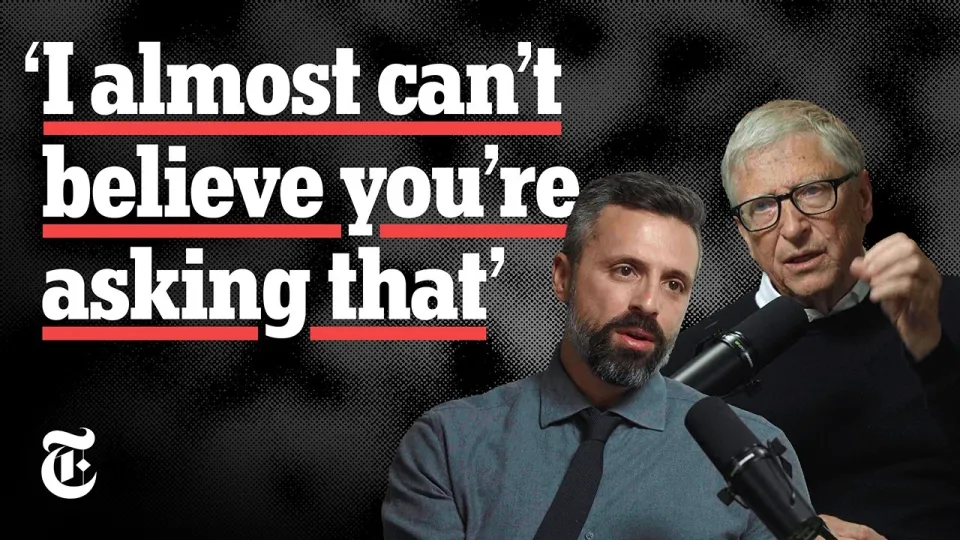
Video: Bill Gates: A.I. ‘Makes Nuclear Weapons Look Like Nothing’ | The Ezra Klein Show
You can order the same kind of articles for your own video to boost it on YouTube and Google. Just message the Telegram bot @sat_sit_bot. Articles with your video embedded are written and posted by the bot itself — on popular topical sites (no ads). Free trial — 50 articles.
· based on the channel The Ezra Klein Show
Key takeaways
- Bill Gates says AI risks—cyberattacks, bioterrorism, job loss—could be worse than nuclear weapons.
- Gates calls the idea that AI companies can self-regulate 'insane.'
- He urges governments to set thresholds for cyber and bio risks and enforce them.
- Gates Foundation will spend about $200 billion over two decades, with AI inequality as a new priority.
- He warns of mass job disruption and debates taxing AI labor and 'human reserved' jobs.
In a conversation with Ezra Klein, Bill Gates argues that AI poses risks so severe—from catastrophic cyberattacks to bioterrorism and mass job loss—that they make nuclear weapons look almost manageable by comparison. He insists that governments must act now, calling the notion that the AI industry can self-regulate “insane.” The full interview is available at The Ezra Klein Show transcript.
What Gates Used to Think About AI—and What Changed
Gates initially dismissed AI alarmism, but he now believes the technology has crossed a threshold into superhuman capability in specific domains. He describes a shift from cautious optimism to genuine fear that society is unprepared for what is being built. This change mirrors his broader evolution from techno-optimist to urgent advocate for oversight, driven by observed advances in AI systems that can outperform humans in targeted tasks.
The Cyber and Bio Thresholds: Why AI Makes Nuclear Weapons Look Tame
Gates identifies two immediate danger zones: cyberattacks and bioterrorism. He argues that AI could enable attacks of unprecedented scale and sophistication, potentially causing millions of casualties. Unlike nuclear weapons, which require rare materials and infrastructure, AI-driven threats could be deployed by smaller groups or even individuals. Gates stresses that we lack robust defenses and that the window to prepare is closing fast.
Why Self-Regulation Fails and Government Action Is Essential
Gates calls industry self-regulation “insane” because profit incentives inevitably conflict with safety. He points to historical failures of self-policing in other industries and argues that only governments can set and enforce red lines. He proposes clear thresholds for cyber and bio risks, with mandatory reporting and audits. Without binding rules, he warns, companies will race ahead, cutting corners on safety to stay competitive.
The AI Race with China and the Need for Global Coordination
Gates acknowledges the geopolitical race with China but insists that safety must not be sacrificed for speed. He advocates for international agreements on AI safety, similar to nuclear arms control treaties. Unilateral action is insufficient; coordination is needed to prevent a race to the bottom. He also highlights the risk of AI widening inequality between developed and developing nations, which his foundation aims to address.
How AI Will Disrupt Jobs and the Economy
Gates predicts massive job displacement across white-collar and service sectors, potentially within a decade. He discusses ideas like taxing AI labor to fund social safety nets and creating “human reserved” jobs—roles that by law must be performed by humans, such as in caregiving or education. He also warns of learning loss in rich countries as AI tutors replace traditional teaching without proper safeguards.
Protecting Children and Rebuilding Foreign Aid
Gates emphasizes the need for AI regulations specifically designed to protect children from harmful content and addictive design. He also calls for rebuilding foreign aid, which has been eroded, and using AI to improve global health and education. His foundation’s new priority is ensuring AI benefits equality rather than deepening divides.
Addressing Common Concerns
Many viewers expressed shock at Gates’s agitation and questioned whether capitalism can self-correct. Gates argues that market incentives alone cannot prevent catastrophic risks; regulation is necessary. Others asked about the feasibility of taxing AI labor—Gates sees it as one of several tools to manage inequality. Some wondered if AI could help developing nations; Gates is optimistic but warns that without deliberate effort, the benefits will flow mainly to the wealthy.
Conclusion
Bill Gates’s warning is stark: AI could enable destruction on a scale that dwarfs nuclear weapons, and we are not ready. He calls for urgent government regulation, international cooperation, and a focus on equity. The Ezra Klein Show provides a platform for this critical conversation, pushing beyond alarmism to actionable solutions. For the full discussion, visit The Ezra Klein Show transcript.
Useful Links
Source: Bill Gates: A.I. ‘Makes Nuclear Weapons Look Like Nothing’ | The Ezra Klein Show · Markdown version
Questions & answers
Why does Bill Gates compare AI to nuclear weapons?
Gates argues that AI could enable cyberattacks and bioterrorism with casualties potentially in the millions, and unlike nuclear weapons, these threats are harder to detect and defend against. He believes the scale of potential harm makes nuclear weapons look almost manageable by comparison.
What does Gates propose instead of self-regulation?
He calls for government-mandated safety thresholds for cyber and bio risks, with mandatory reporting and audits. He also advocates for international agreements to prevent a race to the bottom and ensure global coordination on AI safety.
How does Gates suggest addressing AI-driven job loss?
Gates discusses taxing AI labor to fund social safety nets and creating 'human reserved' jobs—roles legally reserved for humans, such as in caregiving and education. He also emphasizes the need for retraining and education reforms.
What role does the Gates Foundation play in AI?
The foundation has made AI a priority to promote equality, with plans to spend about $200 billion over two decades. It focuses on using AI to improve global health and education while mitigating risks of widening inequality.