Golden Teacher Mushrooms What They Are and Why They Matter in Psychedelic Science
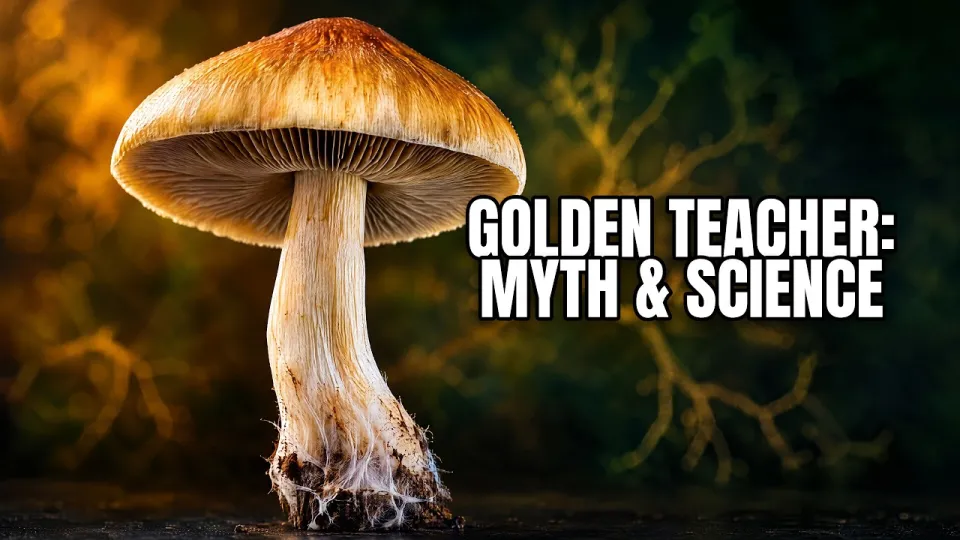
Video: Golden Teacher Mushrooms: Myth, Chemistry & What Science Knows
· based on the channel Shroomverse
Key takeaways
- Golden Teacher is a popular name for psilocybin-containing mushrooms with uncertain taxonomy.
- Psilocybin and psilocin are the main active compounds affecting serotonin receptors.
- Blue bruising in mushrooms indicates chemical oxidation but not potency.
- Brain imaging shows psilocybin alters brain networks related to self-perception.
- Clinical trials use standardized psilocybin, not whole mushrooms, for therapeutic research.
What Are Golden Teacher Mushrooms
Golden Teacher mushrooms are a widely recognized variety of psychedelic mushrooms known primarily for their golden caps and reputedly introspective experiences. Despite their popularity, the label “Golden Teacher” is a community-driven name rather than a formal taxonomic classification, and its precise biological lineage remains unclear. These mushrooms contain the psychoactive compounds psilocybin and psilocin, which interact with serotonin receptors in the human brain to produce altered states of consciousness.
The Chemistry Behind Golden Teacher Mushrooms
The primary active substances in Golden Teacher mushrooms are psilocybin and its metabolite psilocin. Psilocybin is chemically converted into psilocin in the body, which then binds to serotonin 2A receptors, inducing psychedelic effects. However, chemical analysis shows that the concentration of these compounds can vary significantly between samples, meaning that the same named variety does not guarantee a consistent potency or experience. Additionally, the characteristic blue bruising observed when these mushrooms are handled is caused by the oxidation of psilocin, but it does not reliably indicate stronger psychoactive effects.
Brain Imaging and Effects on the Sense of Self
Scientific studies using brain imaging techniques such as fMRI have revealed that psilocybin disrupts the brain's default mode network, which is associated with self-referential thought and the sense of ego. This disruption can lead to ego dissolution, a common feature of psychedelic experiences. While clinical research typically uses purified psilocybin rather than whole mushrooms, these findings help explain why Golden Teacher mushrooms and other psilocybin-containing fungi can produce profound alterations in perception, cognition, and emotional processing.
Naming Myths and Biological Realities
The name “Golden Teacher” originated from the psychedelic community and is not recognized in formal mycology. This leads to confusion because community names often group mushrooms based on appearance or effects rather than genetic lineage. As a result, different mushroom batches labeled as Golden Teacher may differ biologically and chemically. This variability challenges the notion that a named variety guarantees a fixed chemical profile or predictable experience.
Clinical Research and Therapeutic Use
Current clinical trials focus on standardized doses of psilocybin combined with psychological support for conditions such as depression, anxiety, and PTSD. These trials use pharmaceutical-grade psilocybin rather than whole mushrooms, including Golden Teacher. While this research validates the therapeutic potential of psilocybin, it does not directly translate to the effects of consuming natural mushrooms, which contain varying concentrations of active compounds and other constituents.
Blue Bruising Does Not Mean Stronger Effects
The blue bruising reaction seen in Golden Teacher mushrooms results from psilocin oxidation when the mushroom tissue is damaged. Many users believe that more intense bruising means higher potency, but scientific evidence does not support this correlation. Blue bruising is a useful identification characteristic but should not be taken as a measure of strength or safety.
Summary
Golden Teacher mushrooms are a culturally significant and chemically complex group of psilocybin-containing fungi with an uncertain taxonomy. Their effects stem from psilocybin and psilocin interacting with brain serotonin receptors, disrupting networks related to the sense of self. Variability in chemical composition and the informal nature of their naming mean that experiences can differ between samples. Clinical research focuses on purified psilocybin rather than whole mushrooms, highlighting differences between scientific findings and community-held beliefs. This overview is based on educational research and analysis by the Shroomverse channel, which explores the intersection of mycology, psychedelic science, and culture.
Source: Golden Teacher Mushrooms: Myth, Chemistry & What Science Knows · Markdown version
Questions & answers
What compounds make Golden Teacher mushrooms psychoactive?
Golden Teacher mushrooms contain psilocybin and psilocin, which are responsible for their psychedelic effects by interacting with serotonin receptors in the brain.
Does the blue bruising on Golden Teacher mushrooms indicate higher potency?
No, blue bruising results from the oxidation of psilocin when the mushroom is damaged, but it does not reliably indicate the mushroom's potency or strength.
Are Golden Teacher mushrooms a distinct species?
The name Golden Teacher is a community label rather than a formal species classification, and mushrooms sold under this name may vary genetically and chemically.
How does scientific research on psilocybin relate to Golden Teacher mushrooms?
Clinical studies use purified psilocybin with psychological support to study therapeutic effects, which differs from consuming whole mushrooms like Golden Teacher that have variable compound concentrations.